

Note: this story contains strong language
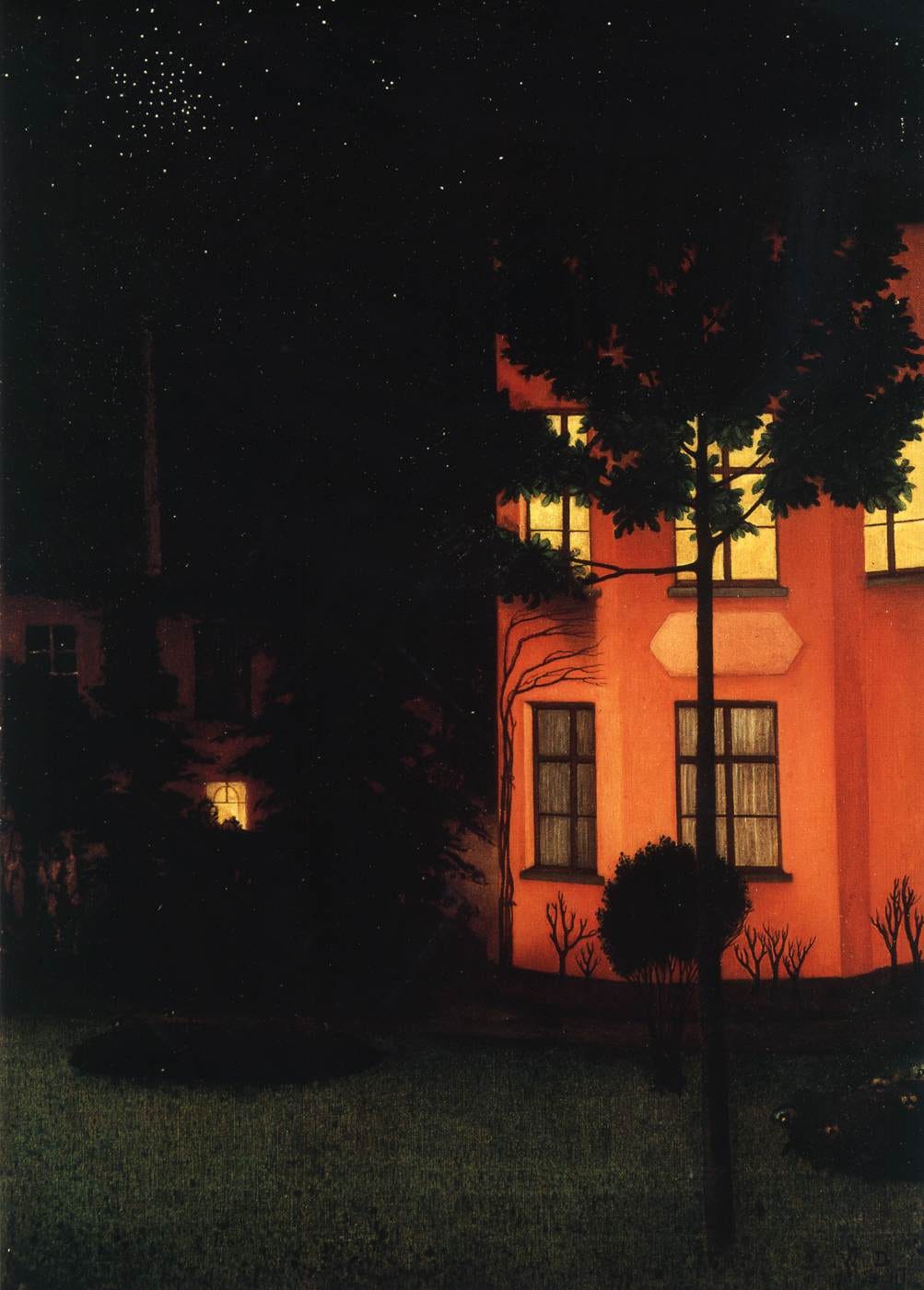
Calvin arrived home around three in the morning, before the sparrows nested at the corner of his roof had stirred. He enjoyed the brief moment of darkness between shutting off his headlights and his eyes adjusting to ambience of the surrounding city. As he walked up to the porch, camera in hand, he placed his feet on the center of each tread above the stringer, careful to avoid breaking through the cracked and rotting steps. The screen in the exterior door dangled partially open as he walked inside. No voices greeted him, nor could any sleeping breath be heard from the bedroom. Calvin lived alone, and had since he graduated from college, though he’d moved a few times. This was his first house, small and dilapidated though it was. He slept in a twin bed.
In the attic, Calvin had set up a makeshift darkroom with thick cardboard covering the two parallel windows at either end, a dim red lightbulb attached to the single pull-chain socket, a few plastic tubs on foldable tables, and his recently developed photographs hanging from a clothesline across one side of the room. He had never been able to find the source of the drafts that occasionally blew through on windy nights. Following his usual routine, he began developing the night’s photographs; he’d taken few that night, and only one or two that he thought might further his search. He’d dabbled in digital photography as well, but never felt it captured the essence of its subjects; it created a simulacrum while film captured an imprint.
Calvin reviewed the photographs after they had been developed. All were exterior shots of unremarkable apartments and homes with light shining from at least one of their windows. Most he placed into a growing pile on a table in the corner of his darkroom; he laid the other two flat on the table in front of him. One, taken from the sidewalk across the street, showed a small, two-story apartment building; it was white and bland and modern, with facing pristine because it had been built just two years ago. The building had four units, and all but one of the tenants had closed their blinds for the night. The photograph showed light shining through the other window, with a woman visible sitting at a desk chair, back to the window while looking at a monitor or TV. Though not discernable from the photo, Calvin remembered that she appeared to be in her mid-30s, slightly overweight, and largely sedentary. While preparing to take the picture, he had seen her move only to take out her phone on occasion, and put it back down. The other of the two photos showed another, similar building, some windows shut, others open, a man standing in one looking out, with dim backlighting shining in from another room.
Though he had a degree in classics, Calvin made his living, as many in his field did, working a blue-collar job. In Calvin’s case, that was commercial construction, a union job with good pay, great health insurance, and five percent 401K matching. At the start, he told himself it was only a temporary position while he searched for something where he could use his degree. As the years dragged on, he never spent as much time as he planned searching for an alternative. Now, having worked for the company for 12 years, Calvin had given up his search for an alternative. He often reflected on his life, what is, what could have been, what he wished was. He didn’t think most people did.
In his 34 years of life, Calvin had spent countless hours observing and thinking about others. He’d watched his classmates, then his co-workers, people at the grocery store or stuck in traffic, people on the sidewalk or in line for a pack of cigarettes at the gas station. He’d seen countless empty faces, glazed eyes, and blank expressions, heard countless vapid conversations, and watched countless bodies act without will. Calvin came to wonder about those people, those bodies. Did they, like him, exhale the breath of life?
The warmth of his blankets had ceased to tempt Calvin long ago, and he arose from his bed without difficulty. He pulled on brown cargo pants, a red T-shirt with the sleeves cut off bearing the logo of a previous employer, and put on his steel-toed boots. He made himself a small breakfast—two scrambled eggs—turned off his lights, walked outside, and locked his front door. He was part of a work-crew building a new affordable housing complex downtown. The plans showed a building, much like any other unadorned rectangle, distinguishable from Soviet design only through its pastel exterior. The cheapest unit in the building was a $2,000-per-month studio, but it was affordable with subsidies. Calvin’s crew had been working on the building for three months. As always, Calvin left his camera in his car.
There was no particular group Calvin ate with during lunch, a generous paid 45-minute affair courtesy of the union’s bargaining agreement. Today, he was with Josh and Mike who joined him after he sat down. Calvin finished his sandwich and decided against eating the apple, planning to save it for later that night. Josh, having finished his lunch, saw Calvin putting it away.
“I should have brought something else, I’ve been carrying shit up four stories all day, and we still have hours left,” Josh said, watching Calvin.
Without saying anything, Calvin looked at his apple, turned it in his hand, and tossed it to Josh, who failed to catch it, letting it drop with a faint thud on to the subflooring. Josh picked up the bruised fruit and took a bite with only a slight nod of acknowledgement. Calvin finished his lunch in silence, listening to Josh and Mike. Josh was extolling the virtues of a porn star he jerked off to; Mike said he preferred the feeling of exclusivity a bit of money bought from a girl on OnlyFans.
“You’re paying some fuck in Calcutta to look at your dick,” said Josh.
Mike looked mildly abashed and quickly changed the topic to another favorite of the duo: Mike’s fat bitch of a girlfriend. After about ten minutes of complaints, ranging from her hygiene and lack of sex drive to her cooking, Calvin reminded them that their 45-minutes were nearly up and stood up to return to work. For the first few years, Calvin had tried to participate in the conversations, adding quips that they often failed to understand. Once he’d even gone out drinking with them after work. He couldn’t understand them, and neither could they him, and so, without ceremony, he stopped trying, and felt no more or less alone in the world.
After work, Calvin drove to a nearby grocery store to buy something for dinner. Inside was man in all his gross variety. Specimens of every race and creed were arrayed before him as he entered, wandering through the aisles in their individual searches for nourishment or carnal satisfaction. He beheld a mother, babe in arms, pierced naval protruding from underneath her tank-top, breasts bearing a message in some arcane alphabet and barely covered; her cart was full. Two men with gang tattoos he saw, conversing in Spanish, a handgun hardly hidden in the waistband of one while the other watched a young family walk by. The daughter was around four; the mother wore transparent skin-tight leggings, a thong clearly visible underneath; the father glared at most who looked, but glanced away from the two tattooed men. Calvin saw a man reveling in the abundance of offerings in the snack aisle, waddling with a look of childish glee on his face before exposing his backside as he bent—with great effort—to grab some treat from a lower shelf. Another man stood in the express lane in a gown fit for a 19th century ball, his chiseled face, bedecked with stage makeup, glared forward at the cashier as he asked for a pack of Marlboro reds. All those vile bodies and more filled the aisles or clamored for a place in line, as dead-eyed clerks smelling of marijuana rang-up their purchases, and joyful baggers, drooling and distant, placed milk atop eggs or chicken with lettuce and wished their patrons a very pleasant evening. A single police officer stood stationed near the door, meant to reassure the customers but powerless in the face of that hoard.
Every evening, Calvin braved those throngs. He went to the prepared food section, grabbed a bag of spring rolls, and checked out as quickly as the length of the line and the competence of the cashier allowed. He brought his meal outside to his car, got inside, and sat in silence eating it. After his meal, Calvin pulled away from the grocery store, sat in traffic—going through three interminable lights—and eventually arrived at another line of parking spaces. The spaces belonged to the city rather than any particular establishment; they lay behind a row of old brick buildings that had long since been converted into a variety of shops: an antique store, a vape-shop, a long-since shuttered African market, a pawn shop, an upscale chocolatier, and a combination tattoo and piercing parlor and sex shop. In front of the parking spaces stood a large cemetery, out of place in its surroundings, graves bearing the names of dead from generations past, the founders of that city—men who once had breathed but now did not. Calvin pulled into one of the spaces and parked; it was just past 6:00 p.m., after which city parking was free until the next morning. He took out his phone and set his alarm for 10:30 p.m., shut his eyes, and quickly fell asleep.
A waxing half-moon glowed in a starless sky, not starless because of any clouds but starless as are skies in every city. Calvin’s alarm woke him. He pulled his seat back up, unlocked the car, and stepped out. A sort of silence rang out, a silence without life but in which could be heard the sounds of sirens and horns, and the occasional bang that could have been an engine backfiring, a firework, or a gunshot. His was the only car parked in front of the cemetery as he stood, stretched, walked over and took his camera and backpack out of the backseat. Calvin set out looking for lighted windows with blinds open. At night, through open windows, Calvin believed he could catch a glimpse at the essence of a man, when all his pretense was gone and when he believed himself unobserved.
Past drifting bags of trash and fallen leaves, Calvin saw a lighted tent pitched in a park not far from where he left his car, a silhouette, crouching gaunt and bent, played across the exterior of the canvas, moving with a moan hinting at a general wretchedness more than a specific pain or pleasure. He watched the shadow for a moment, listening to the moaning, before he raised his camera to capture the image two layers removed—the man casting his shadow on the tent, that shadow, or the light around it, imprinting itself on the film. Perhaps such a remove would reveal something, though Calvin didn’t expect that it would. He walked on into the night, leaving the figure to what, if any, thoughts it may have held.
Not wanting to be stabbed, shot, or otherwise molested, he walked quickly past the homeless shelter, outside of which always gathered a rotating cast of vagrants; it was testament to egalitarian ideals, with men and women gathered according only to economic class without regard for any other variables. That market, first of drugs and then of the ideas they spawned, did not welcome any who eschewed its products, and Calvin walked by quickly on the other side of the street. They watched him and he watched them, but no one spoke until he had passed by.
Farther down that street stood the “Loving Arms Hotel”. It was a pay-per-week establishment with long term tenants. On its single windowless door hung a poorly formatted sign printed on a sheet of standard 8.5x11 paper bearing a phone number and the mistyped slogan “rooms for an ight or a lifetime.” Most guests chose the latter.
Loving Arms shared its aging structure with “Ben’s Pub and Grub,” a bar with a thick metal door that stayed closed at all times except the hottest days of summer, when it stayed propped open because there was no air conditioning. Walking past, Calvin saw light shining from a room in the building’s fourth and highest story. He crossed the street to view it from a better angle. A man in his sixties looked out of the window, eyes staring ahead glazed, though whether in thought or its absence it was impossible to tell. Calvin watched the stationary man, took his picture, and watched for a few minutes more. The man looked from side to side-looked up into the starless sky, and eventually looked down in Calvin’s general direction, though Calvin standing as he was in darkness while the man stood illuminated, was invisible to him. Eventually the man closed the blinds and walked away, and Calvin left as well, walking onto a perpendicular street.
He photographed a standoff in a 24-hour convenience store where three men aimed handguns at each other while a woman stood poised with a knife. In a small house one window showed a nude man sitting in a desk chair facing his computer, his substantial paunch obscuring much of his anatomy. In an apartment window a young woman watched a dating show while scrolling on her phone. In one a man sat alone at his table eating a bowl of cereal; in another a young couple sat on a couch, arms around each other kissing, then more, as a tv glowed in front of them. All those things and more Calvin captured that night before returning to his car. He made a detour around the convenience store due to a heavy police presence, but returned to his car without any other delays. The clock on the dashboard read 2:48 a.m. when he started his drive home, and shortly after three when he arrived.
Calvin climbed the stairs to his attic with his camera and backpack, entered his darkroom, and set to work developing the photos. There was the usual crop of women scrolling on their phones, old men re-watching recorded sports games, nocturnal masturbators, late-night diners, and couples arguing, fighting, kissing, or sitting and nearly touching while utterly oblivious to each other’s presence. Calvin hung those up on the clothesline but paid them little attention; they captured things he’d seen hundreds or thousands of times and added little to his search. On most nights, a few, sometimes only one or two, photographs stood out and hinted that Calvin might not be entirely alone, and that night was no different. That night just one stood out to Calvin, the photo he’d taken of the man at the Loving Arms Hotel. In the photo he could discern elements that were invisible to his naked eye in the dark. He could see the man’s expression, a look of pensive dissatisfaction. The picture also shows a small patch of fog on the window in front of the man’s face. Calvin hung that photograph up on the cloths-line as well and went downstairs to get ready to go to bed and prepare for work the next day.
He fell asleep quickly once in bed. In his dream he looked at the photograph of the man in the hotel window, but in that picture, he was transparent; Calvin could see the blood flowing through his veins, he watched as his heart beat, saw the expansion and contraction of all his muscles and ligaments. He saw his aging bones and a spine crooked from years of bending, and lungs that took in deep and labored breaths.
While Calvin slept, a wind came through and pushed its way through the cracks in his attic. It all rustled the photos on the clothes line but did not blow enough to knock them down. Calvin didn’t wake until his alarm went off.
Seamus Othot is the head editor at Reveille. When he’s not reviewing submissions, he is working as a full-time investigative reporter with The Maine Wire, and appears every weekday at 4:00 p.m. on Maine Wire TV. He can be found on X @Seamus_Othot He graduated from the Thomas More College of Liberal Arts with a bachelor’s degree in 2023.